Why Your Baking Sometimes Fails (Even When You Follow the Recipe Perfectly)
Ever followed a recipe exactly… measured everything carefully, set your timer, said a little prayer to the baking gods… and it still flopped? 😩🧁
You’re not alone — and more importantly, it’s not your fault.
The truth is, baking isn’t just about the recipe. It’s also about your environment — and that’s something most recipes don’t talk about.
Things like altitude, humidity, weather, and even your oven can completely change how your baked goods turn out. Once you understand these little factors, everything starts to make a lot more sense (and your baking improves instantly!).
Let’s break it down in a simple, real-life way.
Altitude: The Invisible Game-Changer
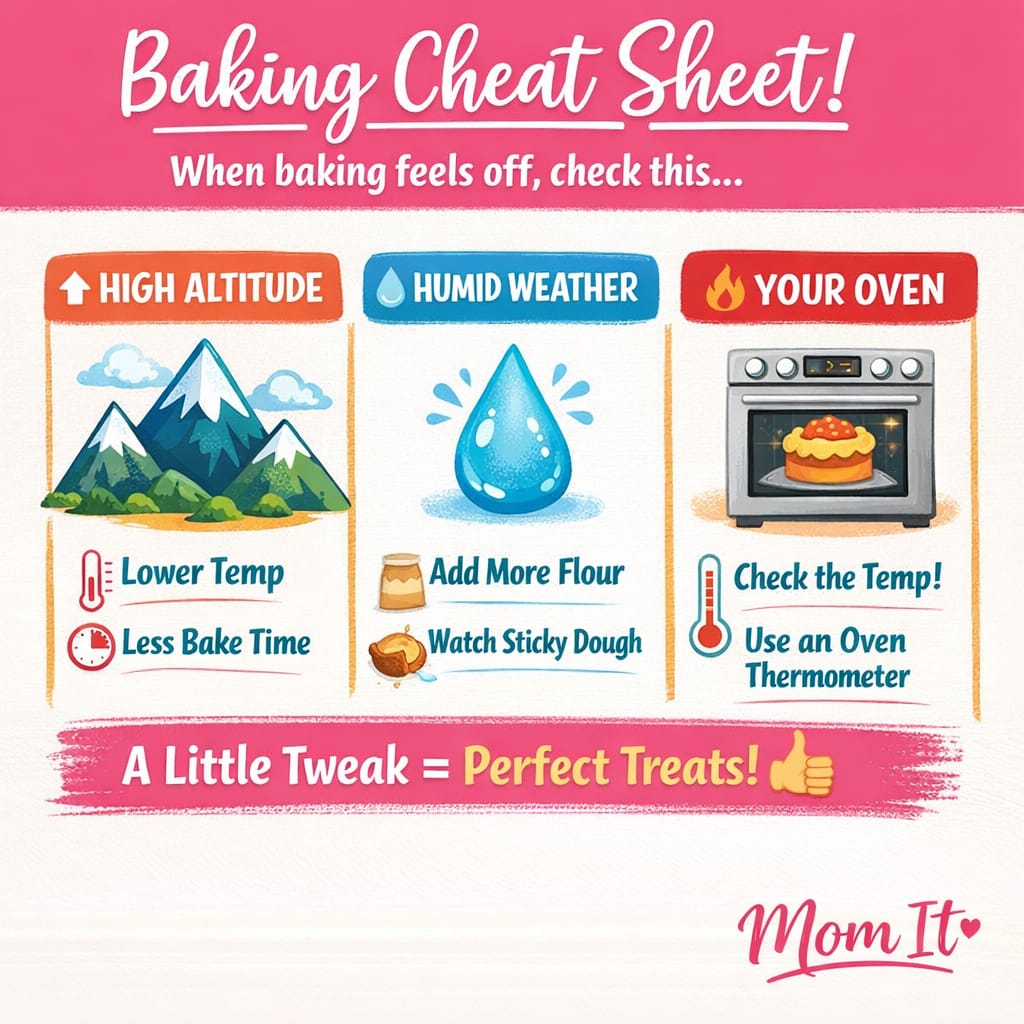
If you live at a higher altitude, the air pressure is lower — and that affects your baking more than you’d think.
What happens?
- Cakes rise faster (sometimes too fast)
- Liquids evaporate quicker
- Bakes can end up dry or collapse in the middle
What you can do:
- Lower your oven temperature slightly (about 5–10°C)
- Start checking your bake a bit earlier
- If needed, add a touch more liquid or reduce raising agents slightly
Humidity: The Coastal Baking Struggle
If you live in a humid area (hello coastal moms 🙋🏻♀️), your ingredients are already holding extra moisture before you even start.
What happens?
- Flour absorbs moisture from the air
- Doughs and batters feel stickier than usual
- Results can be heavier or slightly off texture
What you can do:
- Add a little more flour if your dough feels too sticky
- Keep an eye on texture rather than sticking strictly to measurements
Weather & Temperature: More Important Than You Think
Your kitchen temperature plays a bigger role than most people realize.
On hot days:
- Butter softens too quickly
- Cookies spread more than they should
On cold days:
- Dough can feel stiff
- Yeast breads rise slower
What you can do:
- Chill your dough if your kitchen is hot
- Let ingredients come to room temperature in colder weather
Your Oven: The Sneaky Culprit
Here’s the one that surprises most people…
Not all ovens are accurate.
Even if you set it to 180°C, it might actually be hotter — or cooler.
What happens?
- Food burns too quickly → oven runs hot
- Baking takes forever → oven runs cool
What you can do:
- Lower the temperature slightly if things brown too fast
- Increase slightly if things take too long
- If you bake often, an oven thermometer can make a huge difference
So… Do You Always Need to Adjust?
Not always.
If you’re close to sea level, altitude might not affect you much. But humidity, weather, and oven differences can still play a big role.
The key is learning to notice what your baking is telling you.
The Simple Rule to Remember
If your baking is:
Too dry
Too flat
Browning too quickly
It’s usually not the recipe — it just needs a small tweak.
Final Thought
Baking isn’t about being perfect — it’s about understanding how things work and adjusting as you go.
Once you start making these small changes, you’ll see a big difference… and those “failed” recipes might just become your best ones yet 😍